Orange Empresas
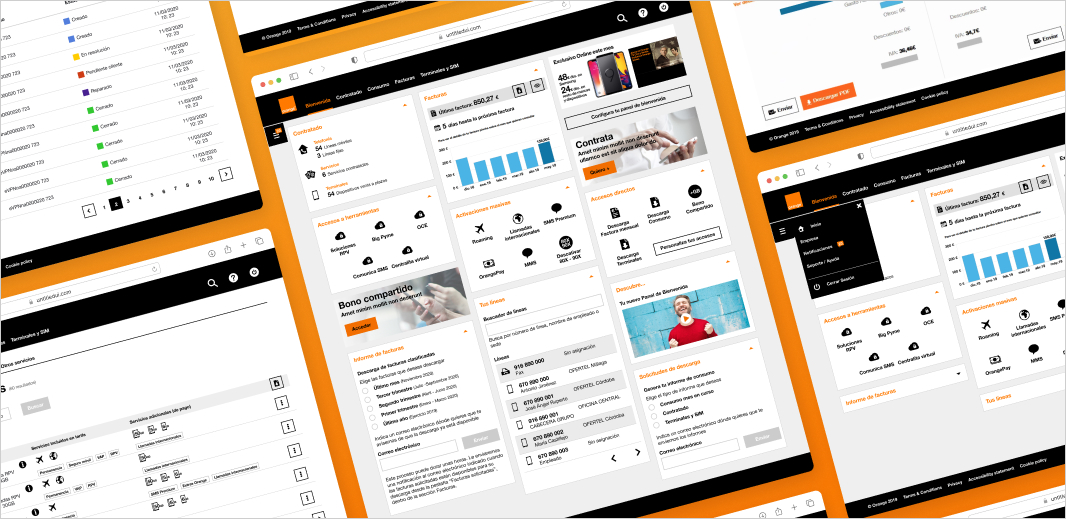
Date: Mar 2020 - May 2021.
Description: Self-service portal for SMEs and freelancers.
Role: Senior Product Designer (UX/UI). As the sole designer, I led all design work: ideation, workshops, UX flows, interface design, prototyping, usability, and collaboration with a research specialist for user testing.
Platform: Responsive web (desktop, tablet, mobile).
Methodology: Agile & Design Thinking.
Tools: Jira, Confluence, Miro and Figma.
The problem
Orange wanted to build a self-service platform for small businesses and freelancers, allowing them to configure, manage, and monitor their contracted services (invoices, usage, tools, and more).
However, the target audience was highly diverse — from a freelancer with a few employees to companies with more than 100 people and international clients.
"The challenge: unify both types of users in a single product while offering an adapted experience that avoided information overload and respected different priorities."
Proposed solution
We designed a modular dashboard that gave users control over what they saw and how they accessed the most-used features.
By allowing collapsible and reorderable content blocks, users could customize their welcome panel to focus on what mattered most — whether invoices, service activations, or line usage.
Although business constraints prevented full customization, we balanced user freedom with strategic visibility of key sections such as "Contracted services" and "Invoices".
We also rethought navigation with two complementary systems: a primary top menu based on lifecycle stages, and a contextual side drawer with company-specific options.
The team
I worked as the sole UX/UI designer on the project, collaborating closely with:
- Business stakeholders.
- The development team.
- A user research specialist.
- Project managers and Agile team members.
Process
We followed a Design Thinking approach:
1. Empathize
I led workshops with stakeholders to align expectations and identify business goals.
2. Define
We created personas representing freelancers and SMEs with different needs and behaviors.
3. Ideate
We mapped user journeys and collaboratively sketched dashboard components and navigation flows.
4. Prototype
I designed interactive prototypes in Figma for desktop and mobile.
5. Test
Prototypes were tested with users to validate discoverability, task efficiency (e.g. deactivating services, downloading reports), and satisfaction.
Results
- Successful launch of a scalable, flexible portal for SMEs and freelancers.
- Improved task success rate (e.g. downloading invoices, managing services).
- Reduced cognitive load by allowing users to collapse or reorder dashboard modules.
- Positive feedback from internal stakeholders and pilot users on customization options.
- Reuse of the EGEO portal (Espacio Grandes Empresas Orange) with features adapted for smaller clients.
Key takeaways
- Designing for user control increases adoption, but requires careful negotiation with business and technology constraints.
- Customization does not have to be total — partial flexibility can still create a sense of ownership.
- It is crucial to differentiate content while maintaining a unified structure and visual identity.
- The onboarding process is vital to help users understand new interaction models such as configurable dashboards.
Conclusion
This project was a great opportunity to lead an end-to-end product design process for a complex user base. By betting on flexibility, prioritizing user goals, and working cross-functionally, we delivered a platform that meets both business and user needs.
It also reinforced my conviction that giving users clarity, control, and simplicity is always a worthwhile investment.
Design gallery
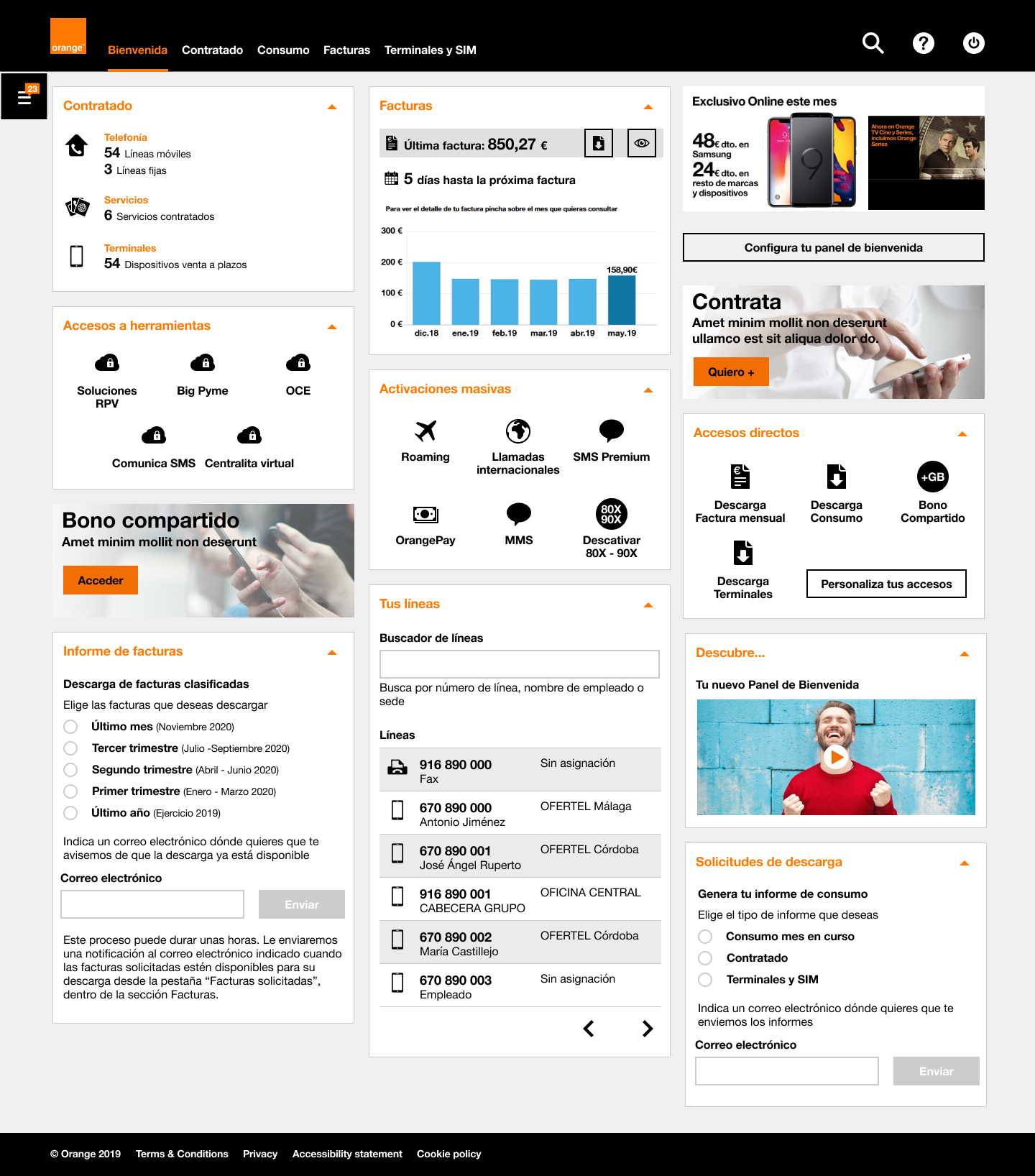
Expanded dashboard (desktop version)
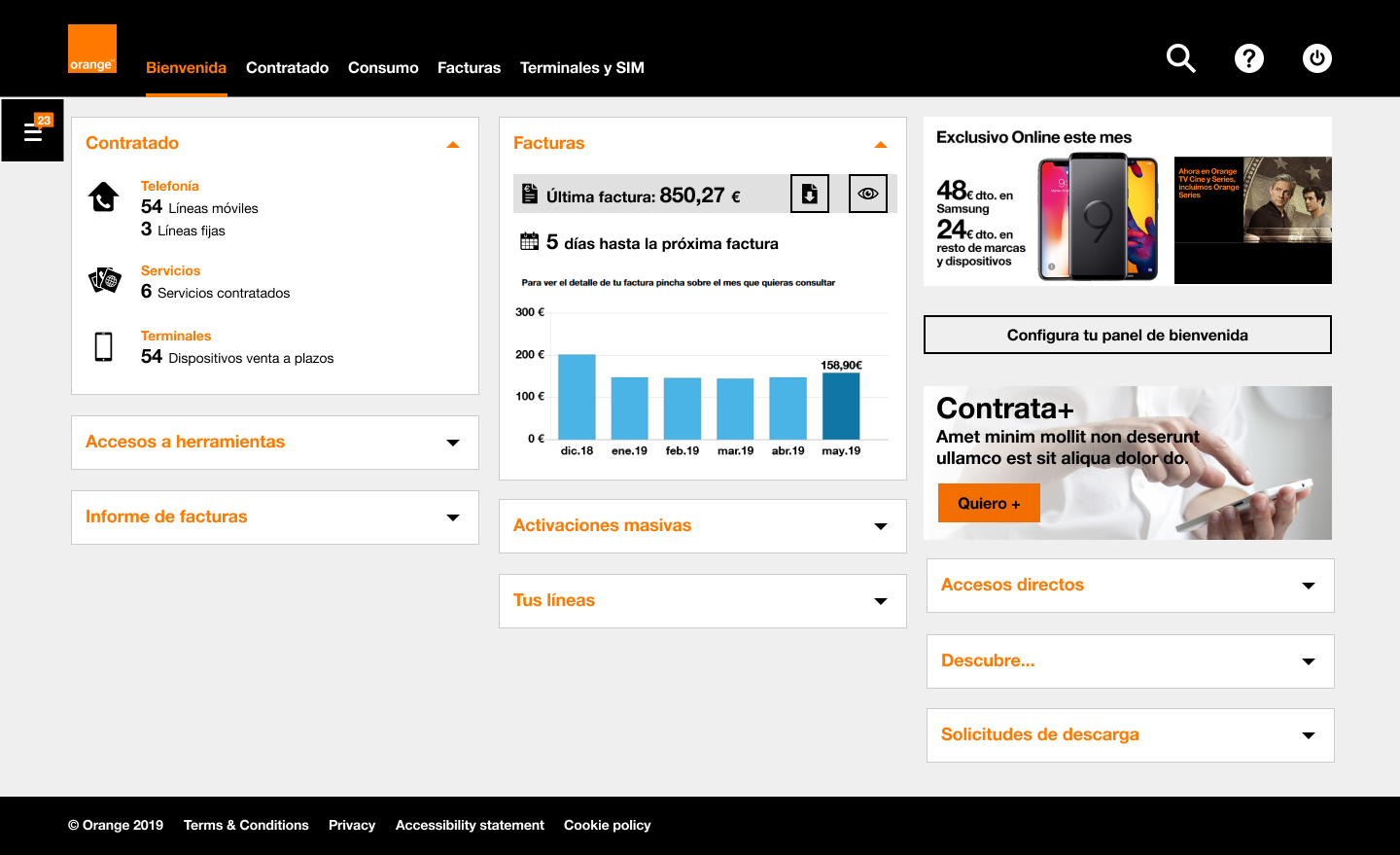
Collapsed dashboard (desktop version)
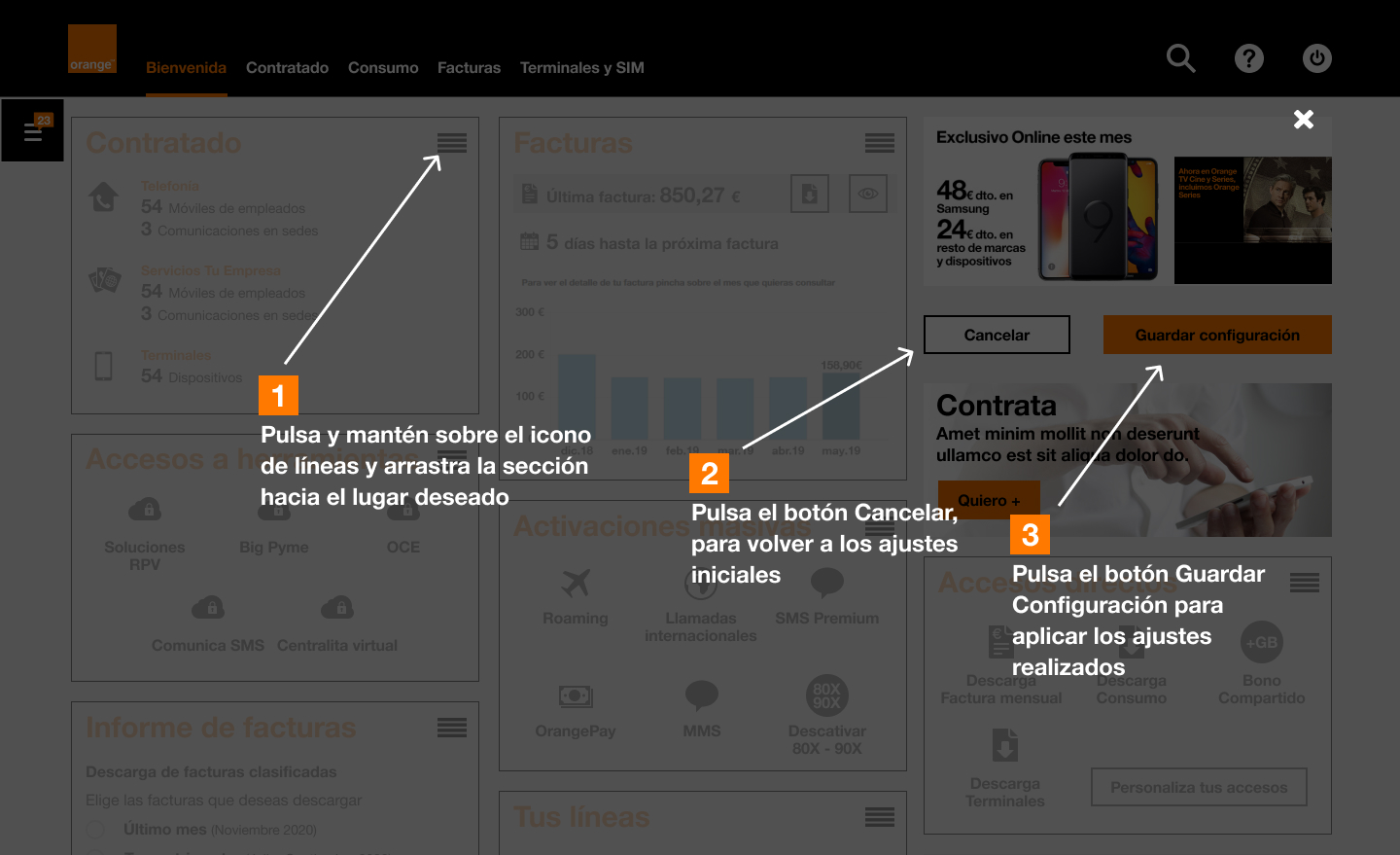
Onboarding to customize the dashboard
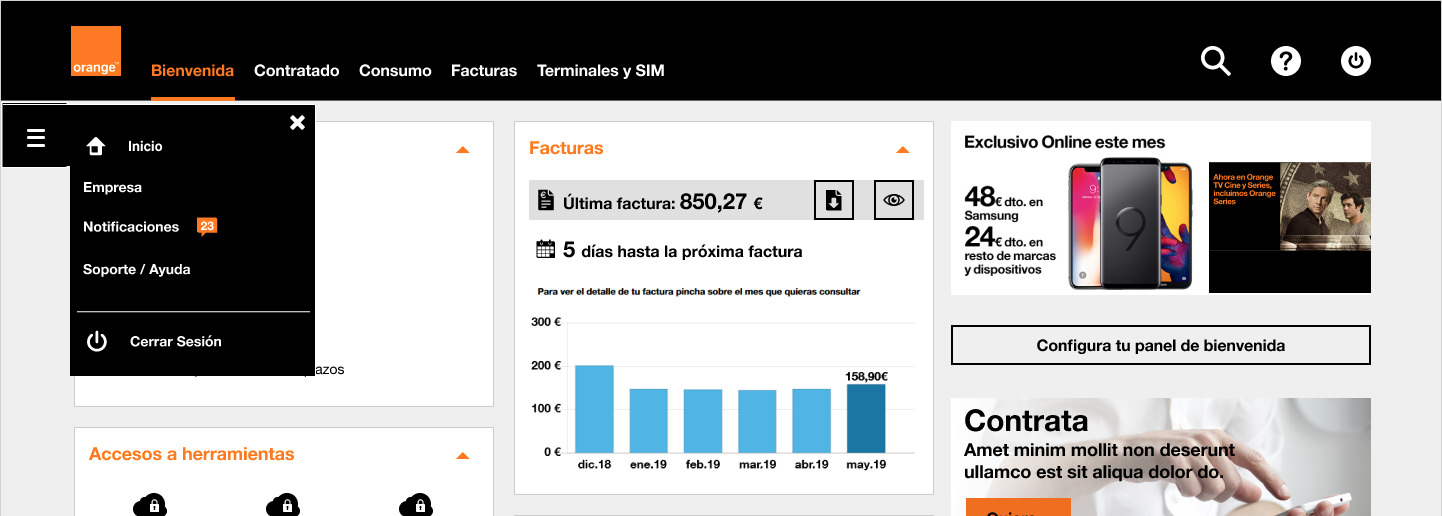
User menu
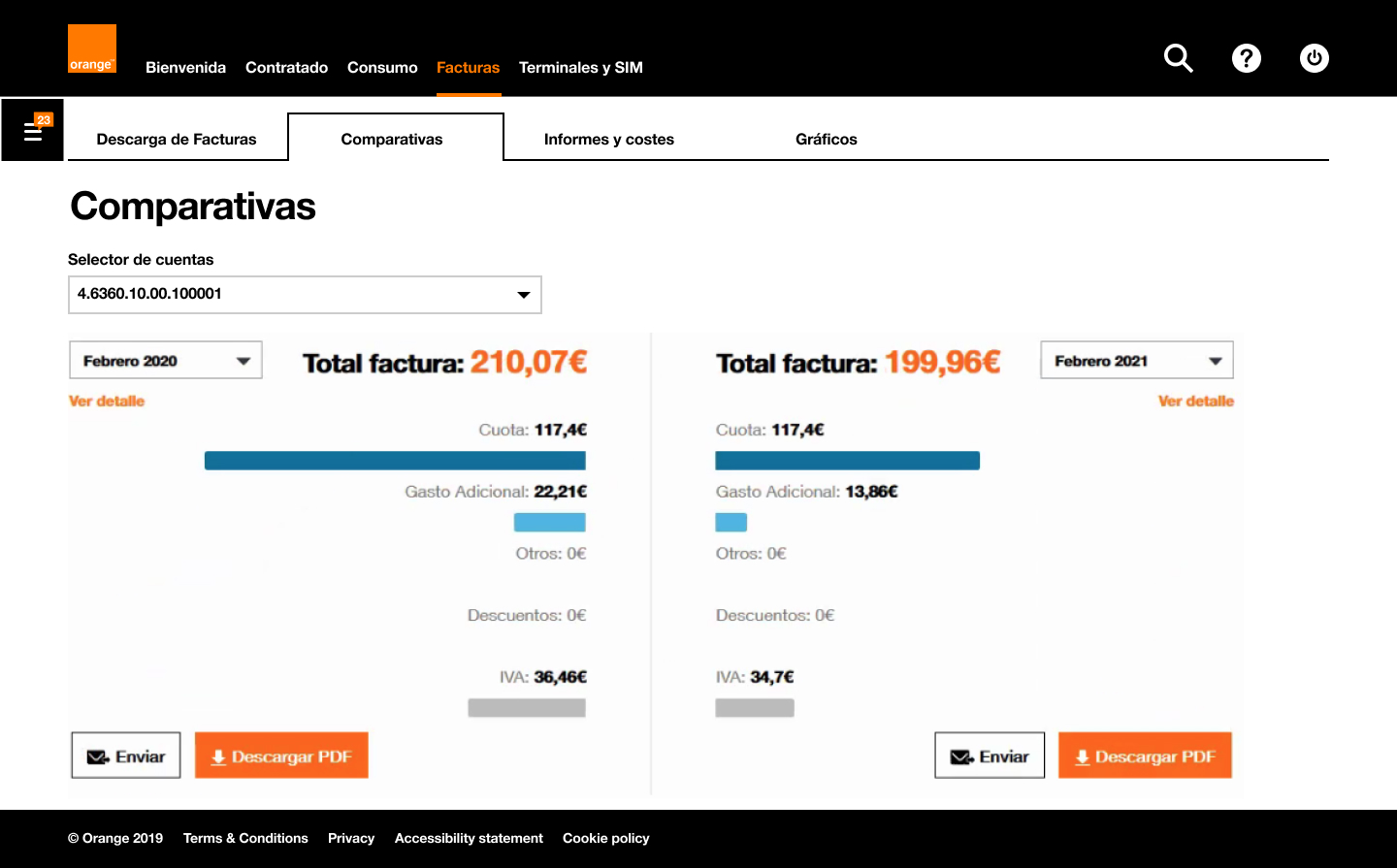
Invoices page - Comparison
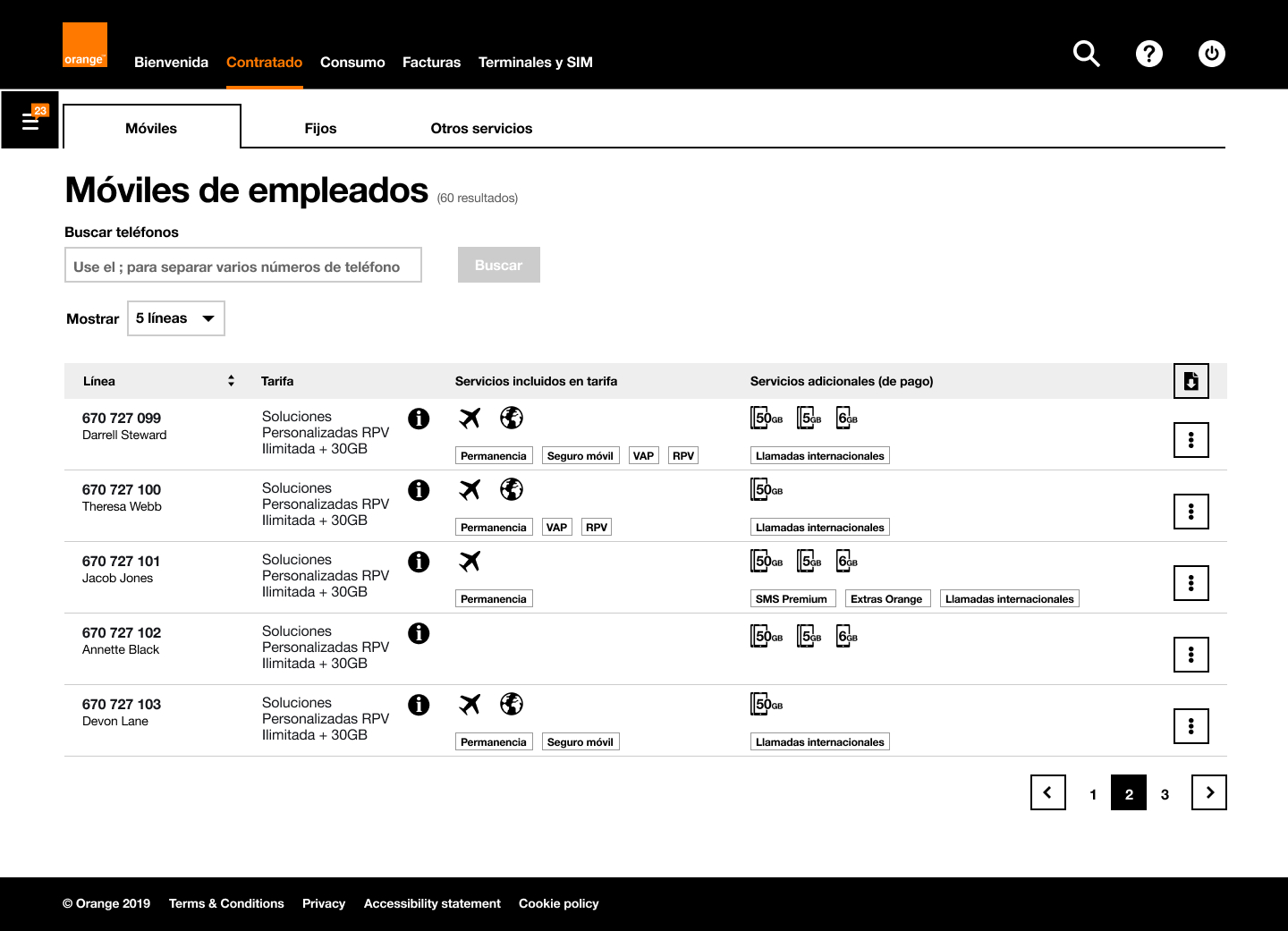
Contracted services page
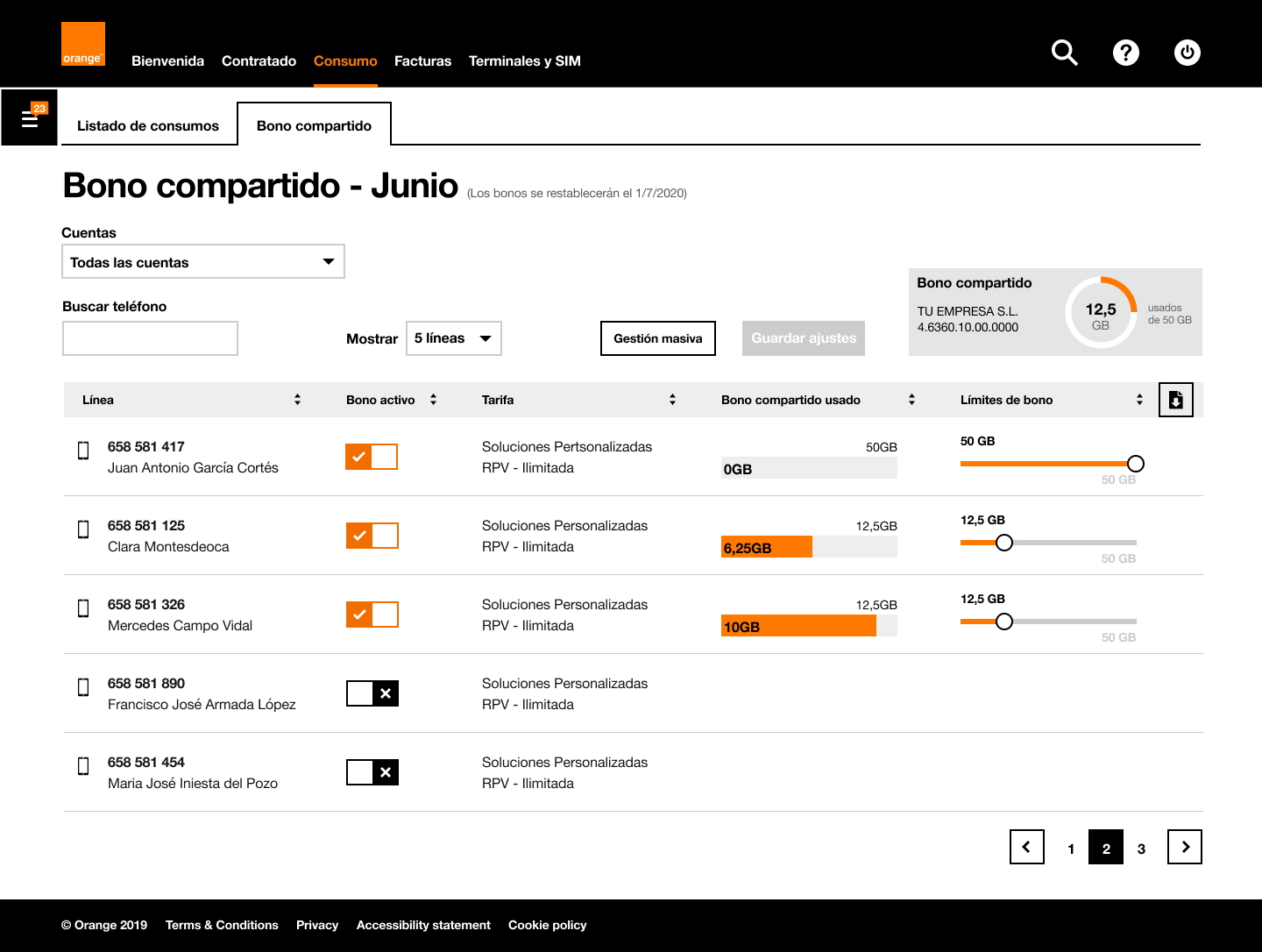
Usage page
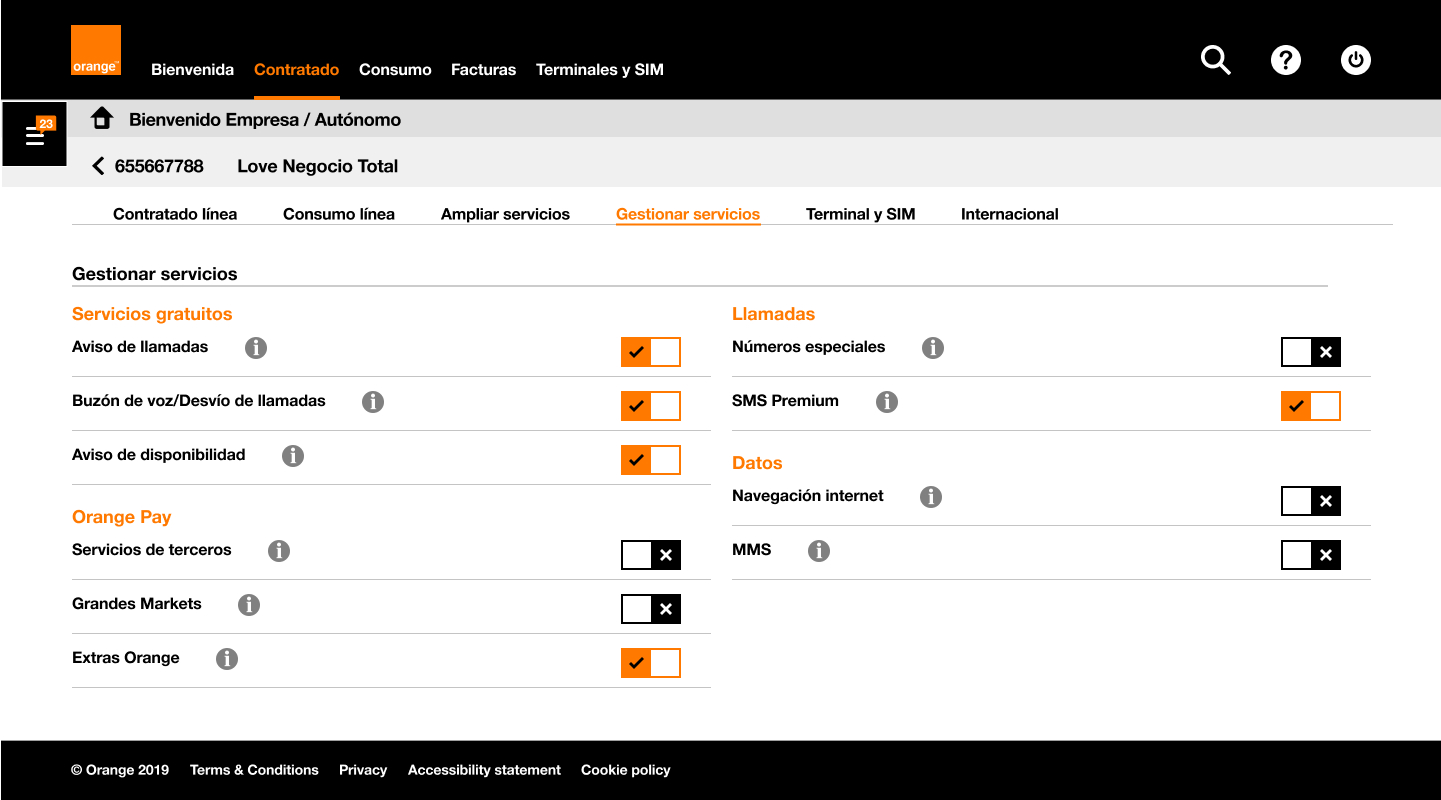
Product navigation page